
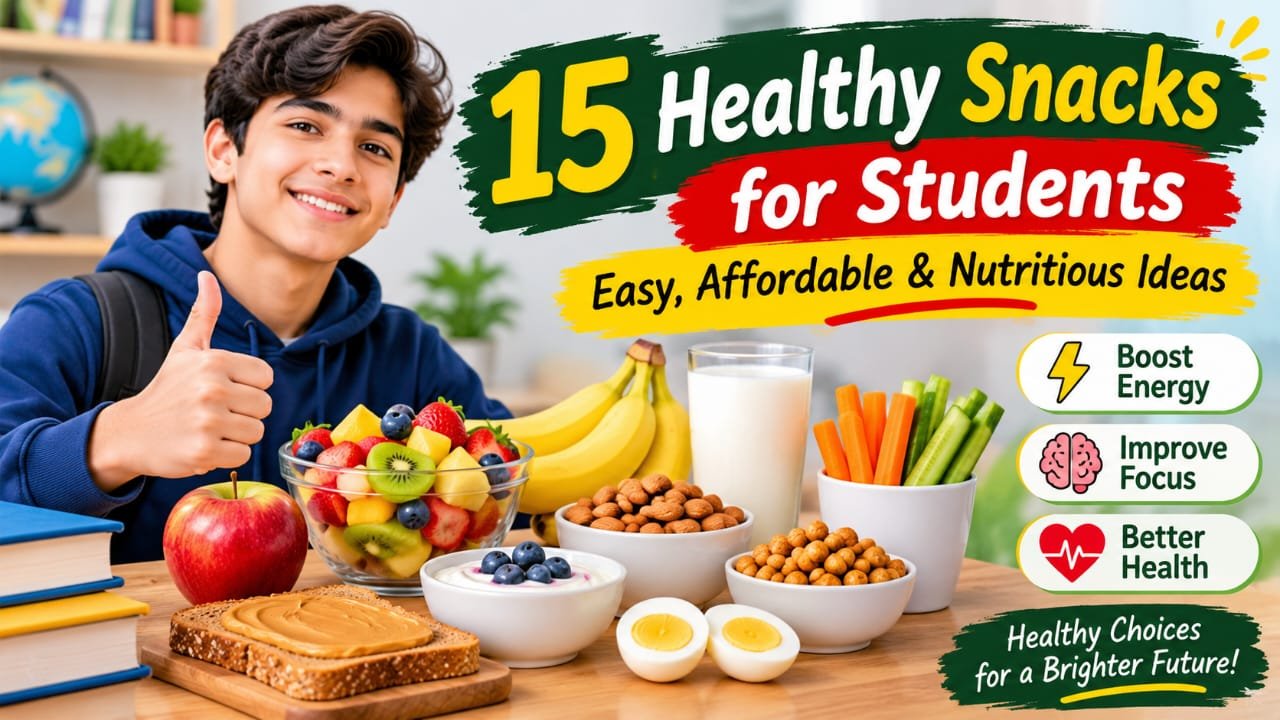
15 Healthy Snacks for Students: Easy, Affordable & Nutritious Ideas
Table of Contents
Introduction :
Students often have busy schedules filled with classes, assignments, examinations, and extracurricular activities. Finding time to prepare Healthy Snacks for Students nutritious food can sometimes be challenging. Choosing convenient snacks can make it easier to enjoy a balanced eating routine throughout the day.
The best healthy snacks for students are simple to prepare, affordable, easy to carry, and made with ingredients that are readily available. From fresh fruits and homemade sandwiches to roasted chickpeas and yogurt, there are plenty of options for school, college, and studying at home.
In this guide, you will discover 15 nutritious snack ideas, practical preparation tips, affordable Pakistani food options, and ways to store snacks safely.
Why Are Healthy Snacks Important for Students?
Healthy Snacks for Students can complement regular meals and provide an opportunity to include more variety in a student’s daily eating routine.
Choosing foods from different food groups can help students get important nutrients, including protein, fiber, vitamins, minerals, and carbohydrates.
Some benefits of choosing nutritious snacks include:
- Nutritional variety: Fruits, vegetables, dairy products, nuts, and whole grains provide different nutrients.
- Convenience: Prepared snacks make busy school and college days easier.
- Food variety: Trying different ingredients can make everyday eating more enjoyable.
- Balanced eating habits: Nutritious snacks can complement regular meals.
- Better food planning: Preparing snacks at home can make it easier to choose ingredients.
A healthy eating routine is not about avoiding every favorite food. It is about enjoying a variety of foods and making practical choices.
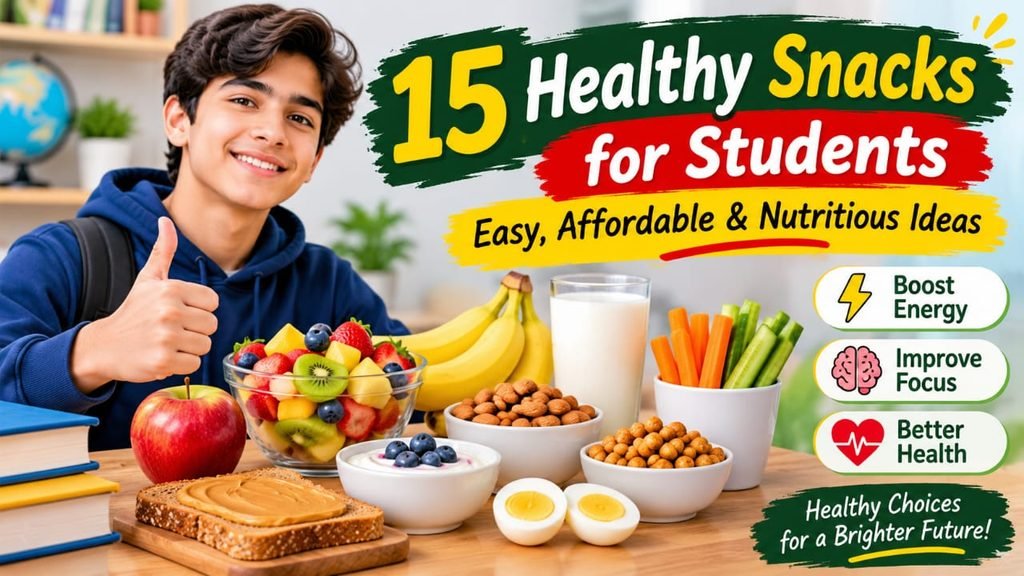
15 Best Healthy Snacks for Students
Here are 15 easy snack ideas that students can prepare at home or carry to school and college.
- Fresh Seasonal Fruits
Fresh fruits are among the easiest snacks to prepare. Apples, bananas, oranges, grapes, guavas, and seasonal fruits are convenient choices.
They provide vitamins, minerals, and dietary fiber. Students can carry whole fruits in their bags or prepare fruit pieces in a clean container.
Preparation tip: Wash fruits properly before eating. Cut fruits should be stored in a suitable container and kept cool when necessary.
- Yogurt with Fresh Fruits
Plain yogurt combined with fresh fruit makes a simple and versatile Healthy Snacks for Students.
Yogurt provides protein and calcium, while fruits add dietary fiber and variety. Students can combine plain yogurt with banana slices, apples, or seasonal berries.
Preparation tip: Add fruit shortly before eating and keep yogurt refrigerated or in an insulated lunch bag.
- Boiled Eggs
Boiled eggs are a convenient source of protein and can be prepared in advance.
They are easy to combine with whole-grain bread, cucumber slices, or tomatoes for a more substantial snack.
Preparation tip: Cook eggs thoroughly, refrigerate them promptly, and keep them cool until they are eaten.
- Roasted Chickpeas
Roasted chickpeas are an affordable snack that is particularly convenient for students.
Chickpeas contain plant-based protein, dietary fiber, and other nutrients. They can be seasoned with cumin, black pepper, or mild spices.
Preparation tip: Prepare a batch at home and store it in a clean, airtight container once completely cooled.
- Peanut Butter Whole-Grain Toast
Whole-grain toast topped with peanut butter is a simple snack combining carbohydrates, protein, and fats.
Students can prepare it within a few minutes. Banana slices can also be added for extra flavor.
Preparation tip: Choose peanut butter with a simple ingredient list and check for allergies before sharing it with others.
- Homemade Popcorn
Homemade popcorn is an easy whole-grain snack that students can prepare at home.
It can be seasoned with mild spices or a small amount of salt according to personal preference.
Preparation tip: Prepare popcorn using a little cooking oil and avoid adding excessive salt or sugary coatings.
- Nuts and Seeds
Almonds, walnuts, pumpkin seeds, and sunflower seeds are convenient foods that provide protein, fiber, and healthy fats.
Students can combine different varieties in a small reusable container.
Preparation tip: Check for allergies and school food policies before packing or sharing nuts.
- Vegetable Sticks with Hummus
Carrots, cucumber, and capsicum make refreshing snack options.
Pairing these vegetables with hummus adds flavor and provides plant-based protein and fiber.
Preparation tip: Wash vegetables thoroughly, cut them into manageable pieces, and keep the hummus refrigerated.
- Banana and Milk
Bananas and milk are simple ingredients that can be enjoyed together at home or as part of a packed snack.
Bananas provide carbohydrates and dietary fiber, while milk contains protein and calcium.
Preparation tip: Choose plain milk and keep it refrigerated or properly chilled when carrying it outside.
- Whole-Grain Crackers with Cheese
Whole-grain crackers paired with cheese offer a convenient combination of grains, protein, and calcium.
This snack is suitable for students who prefer something savory rather than sweet.
Preparation tip: Keep cheese refrigerated or in an insulated lunch bag until serving.
- Homemade Fruit Salad
A homemade fruit salad is an enjoyable way to combine different seasonal fruits.
Students can use apples, bananas, oranges, guavas, and other available fruits.
Preparation tip: Wash ingredients before cutting, use a clean container, and refrigerate the prepared salad.
- Oatmeal with Fruit
Oatmeal is commonly enjoyed at breakfast, but it can also be prepared as a convenient snack.
Oats provide whole-grain carbohydrates and dietary fiber. Adding milk, yogurt, bananas, or other fruits makes the snack more varied.
Preparation tip: Prepare oatmeal in advance and refrigerate it if you plan to eat it later.
- Homemade Chicken Sandwich
A homemade chicken sandwich is a practical option for students who want something more substantial.
Use whole-grain bread, properly cooked chicken, cucumber, lettuce, and tomatoes.
Preparation tip: Refrigerate chicken sandwiches and transport them in an insulated lunch bag to keep them at a safe temperature.
- Dates with Nuts
Dates and nuts are commonly available in Pakistani markets and are easy to carry.
Dates provide carbohydrates and dietary fiber, while nuts contribute protein and unsaturated fats.
Preparation tip: Combine different ingredients in a small container for a convenient snack.
- Homemade Fruit Smoothie
A homemade smoothie can combine milk or plain yogurt with bananas and seasonal fruits.
It is easy to prepare and allows students to experiment with different fruit combinations.
Preparation tip: Use fresh ingredients, avoid unnecessary added sugar, and refrigerate the smoothie if it will not be consumed immediately.
Affordable Healthy Snacks for Students in Pakistan
Eating nutritious snacks does not require expensive imported products. Many everyday Pakistani foods can be included in a varied eating routine.
Here are some affordable options:
Snack| Main nutritional features
Roasted chickpeas| Plant-based protein and fiber
Seasonal fruits| Vitamins, minerals, and fiber
Boiled eggs| Protein and essential nutrients
Plain yogurt| Protein and calcium
Dates| Carbohydrates and fiber
Homemade popcorn| Whole-grain carbohydrates
Peanut butter toast| Protein and carbohydrates
Cucumber slices| Water and small amounts of vitamins
Homemade sandwiches| Grains and protein, depending on fillings
Prices and availability vary by season, city, and local market.
Students can also use leftover properly stored cooked vegetables or chicken to prepare simple sandwiches and other snacks.
Easy Healthy Snacks to Eat While Studying
Long study sessions can make it convenient to keep food nearby. Instead of relying only on packaged snacks, Healthy Snacks for Students can prepare a selection of simple options.
Some useful ideas include:
- Apple slices with peanut butter.
- Plain yogurt with banana.
- Roasted chickpeas.
- Homemade popcorn.
- Whole-grain crackers with cheese.
- Dates with almonds.
- Cucumber and carrot sticks with hummus.
Keep drinking water available during study sessions. Remember that snacks complement regular meals rather than replace the variety of foods needed throughout the day.
How to Prepare Healthy Snacks for School and College
Preparing snacks ahead of time can save time during busy mornings.
Follow these practical steps:
- Plan Snacks in Advance
Choose a few snack ideas for the coming school or college days. Planning makes shopping and preparation easier.
- Use Reusable Food Containers
Clean containers help organize different foods and make snacks easier to carry.
- Choose Convenient Ingredients
Select foods that are easy to wash, prepare, and transport, such as seasonal fruits, whole-grain bread, and roasted chickpeas.
- Store Perishable Foods Safely
Foods such as yogurt, eggs, cheese, milk, and cooked chicken require proper refrigeration. Use an insulated lunch bag with cold packs when transporting them.
- Check Food Labels
When buying packaged snacks, check the ingredient list and nutritional information, including added sugars and sodium.
- Consider Food Allergies
Always check ingredients before sharing food with classmates. Follow any school or college allergy policies.
Healthy Homemade Snacks vs. Packaged Snacks
Both homemade and packaged snacks can be convenient, but they have different advantages.
Feature| Homemade snacks| Packaged snacks
Ingredients| Easier to choose| Check the label
Preparation| May require preparation| Usually ready to eat
Variety| Easy to customize| Depends on availability
Cost| Can be economical| Depends on the product
Storage| Depends on ingredients| Follow package instructions
Homemade snacks allow students to choose ingredients according to their preferences. Packaged foods can also be useful when selecting and storing them appropriately.
Common Snacking Mistakes Students Should Avoid
Students can make snack planning easier by paying attention to a few common issues.
Depending Only on Packaged Foods
Eating the same packaged snacks every day may reduce the variety of foods in a student’s eating routine. Include fruits, vegetables, whole grains, and other food groups where possible.
Forgetting Food Safety
Perishable foods should not be left at room temperature for extended periods. Refrigerate them promptly and use insulated containers when necessary.
Ignoring Food Allergies
Ingredients such as peanuts, tree nuts, milk, and eggs can cause allergic reactions in some people. Check food labels and avoid sharing foods without checking first.
Skipping Variety
Eating different foods helps provide a wider range of nutrients. Try different combinations instead of relying on only one snack.
Choosing Drinks Without Checking Their Ingredients
Some sweetened beverages contain considerable amounts of added sugar. Plain water and unsweetened drinks are useful everyday options.
Frequently Asked Questions About Healthy Snacks for Students
- What are the best healthy snacks for students?
Some convenient options include fresh fruits, plain yogurt, boiled eggs, roasted chickpeas, nuts, vegetable sticks, and homemade sandwiches.
- What are some affordable snacks for college students?
Roasted chickpeas, seasonal fruits, homemade popcorn, dates, boiled eggs, and homemade sandwiches are practical choices.
- What are good snacks to eat while studying?
Students can try fruit, yogurt, nuts, whole-grain crackers, homemade popcorn, or vegetable sticks with hummus.
- Can students prepare snacks in advance?
Yes. Many snacks can be prepared ahead of time. However, foods containing dairy, eggs, or cooked meat need proper refrigeration and safe transportation.
- Are homemade snacks better than packaged snacks?
Homemade snacks make it easier to choose ingredients and adjust flavors. Packaged snacks can also be convenient. Checking nutritional labels helps students make informed choices.
- What are some healthy Pakistani snacks for students?
Roasted chickpeas, seasonal fruits, dates, homemade yogurt, boiled eggs, and homemade sandwiches are examples of accessible snack options in Pakistan.
- How can students make snacks more nutritious?
Students can combine different food groups, such as fruit with yogurt, whole-grain bread with eggs, or vegetables with hummus. This adds variety to their everyday food choices.
Conclusion
Choosing healthy snacks for students can be simple, affordable, and enjoyable. Fresh fruits, yogurt, roasted chickpeas, boiled eggs, nuts, homemade sandwiches, and other everyday foods provide plenty of variety.
Students can make snack preparation easier by planning ahead, using locally available ingredients, checking food labels, and storing perishable foods safely.
Start with a few ideas from this guide and discover which combinations work best for your school, college, or study routine.
At Pediavibe, we believe that practical food choices and reliable information can help students build better everyday habits.
Health information disclaimer: This article is for general educational purposes only. Individual nutritional needs vary. Consult a qualified healthcare professional for personalized dietary advice.
References and Further Reading
- “World Health Organization – Healthy Diet” (https://www.who.int/news-room/fact-sheets/detail/healthy-diet)
- “Centers for Disease Control and Prevention – How to Have Healthier Meals and Snacks” (https://www.cdc.gov/healthy-weight-growth/healthy-eating/meals-snacks.html)
- “NHS – Healthier Snacks” (https://www.nhs.uk/healthier-families/food-facts/healthier-snacks/)
Explore more health and fitness tips on Pediavibe.